
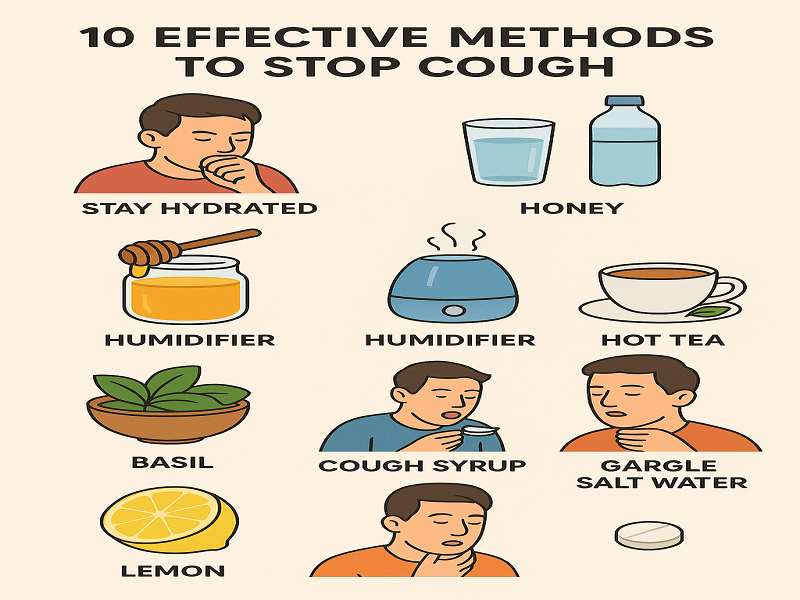
10 effective methods to stop cough
A chronic cough can be more than just an annoyance. It can disrupt your sleep, make you feel unwell, affect your work and social life, and even be a sign of underlying health problems.
Coughing can be caused by a variety of reasons and usually begins after a sneeze, so the simplest home remedy for coughing is to inhale steam, even from a hot bath or the steam from a kettle. Mucus is more easily expelled when the air is warm and humid.
However, if a cough continues to bother you, you can try these natural remedies that can help soothe an annoying cough. Here are 10 natural ways to stop a cough:
1. Drink plenty of water

Staying well-hydrated is the first line of defense against coughs and other respiratory issues. When dehydrated, the body produces less saliva and mucus, resulting in a dry throat and increased susceptibility to irritation. This can lead to a persistent cough. Drinking plenty of water helps thin the mucus in the throat, making it easier to cough up and clearing the airways.
2. Eat a spoonful of honey

Honey is a time-honored remedy for coughs. Its antibacterial and antifungal properties can help clear infections, while its viscosity can coat and soothe an irritated throat. Consider taking a spoonful of honey before bed to reduce nighttime coughing. Caution: Never give honey to children under 1 year old due to the risk of botulism.
3. Drink some herbal tea.

Certain herbal teas, such as thyme, chamomile, peppermint, and licorice root, are beneficial for coughs. These teas are known for their soothing properties, which can help reduce the cough reflex. The warmth of the tea can also stimulate saliva production, further relieving dryness and irritation in the throat. For example, thyme has long been used in traditional medicine to treat respiratory ailments. Its compounds can act as relaxants for the throat muscles involved in coughing, reducing inflammation.
4. Rinse your mouth with salt water to reduce cough.

Gargling with warm salt water can help soothe a sore throat or the itching that often accompanies a cough. Salt water helps reduce inflammation and kill bacteria, providing temporary relief. Dissolve half a teaspoon of salt in a cup of warm water, gargle for a few seconds, and then spit it out.
5. Eat a slice of pineapple

Pineapple contains an enzyme called bromelain, which can help suppress coughs and loosen mucus. It’s best to eat a slice of pineapple or drink natural pineapple juice, but if you prefer a more concentrated form of bromelain, you can also purchase bromelain supplements.
Read my other blog:
5 Winter Care Tips for Seniors
6. Use ginger to reduce inflammation

Ginger is a natural anti-inflammatory and antioxidant that can help relieve coughs. It can reduce respiratory inflammation and may even help suppress the cough reflex. Try drinking fresh ginger tea a few times a day to relieve your cough.
7. Drink a cup of warm turmeric beverage.

Turmeric contains curcumin, a compound known for its anti-inflammatory, antioxidant, and antiviral properties. Drinking a warm turmeric beverage can help soothe a sore throat, reduce inflammation, and relieve coughs.
8. Add probiotics to your diet

While probiotics cannot directly relieve a cough, they can balance your gut flora, help boost your immune system, and prevent coughs caused by colds or the flu. Probiotics can be found in fermented foods such as yogurt, sauerkraut, and kimchi, and can also be taken as supplements.
9. Avoid contact with irritants.

Environmental irritants such as smoke, dust, or strong odors can worsen a cough. Keeping the environment clean and avoiding contact with irritants can greatly help control a cough.
10. Maintain a regular sleep schedule.

Last but not least, it’s crucial to give your body ample time to recover. Sleep and rest are essential when you’re coughing, as they provide the necessary time for your body to heal. Try to maintain a regular sleep schedule and create a comfortable, quiet sleep environment.
Please remember that while these natural remedies may relieve a cough, they may not treat the underlying cause of the cough.
If a cough persists for more than a week, is severe, or is accompanied by other worrying symptoms such as fever, weight loss, or difficulty breathing, you must seek medical attention.